Podcast: Play in new window | Download
Subscribe: Apple Podcasts | RSS
FEATURE INTERVIEWS:
SEMA SHOW SPECIAL 2025 – Episode #3:
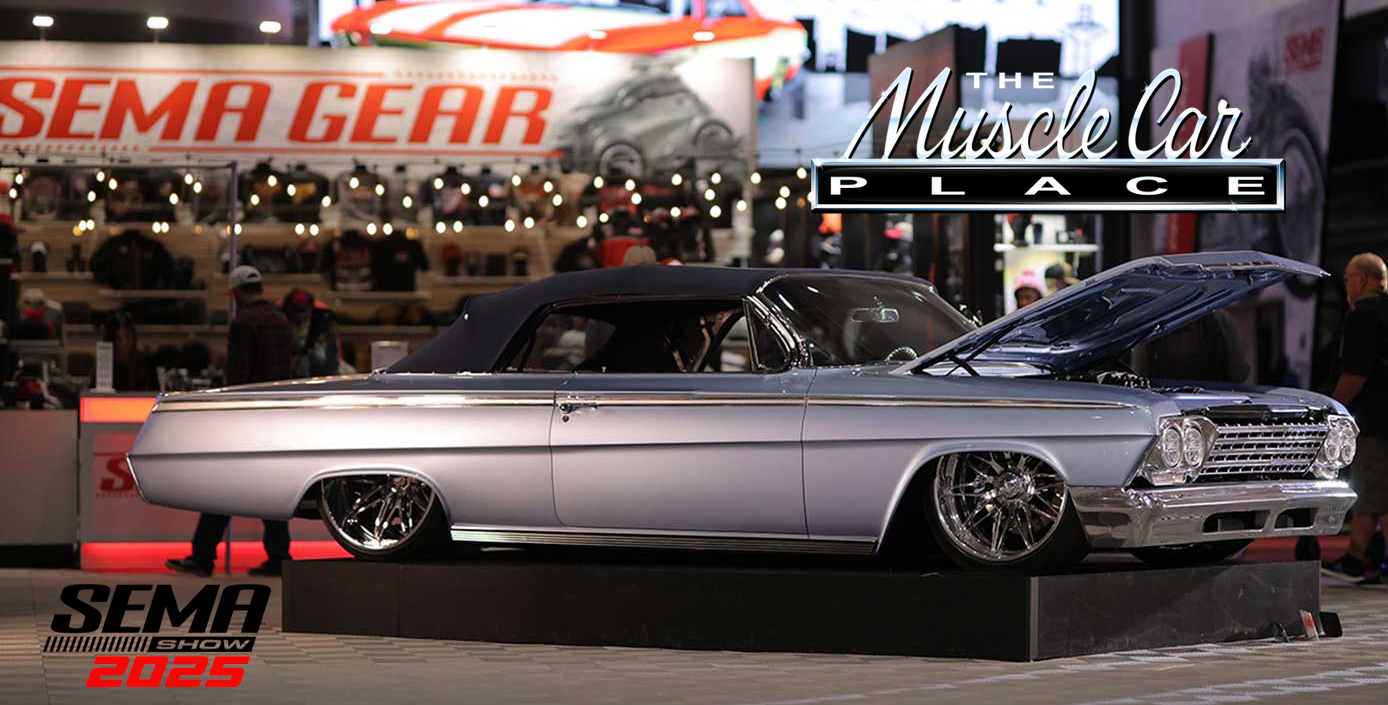
SEMA 2025 rolls on in this third of four special episodes from the show floor, landing just in time for Thanksgiving travel, turkey prep, or that emergency gas-station run for the stuff your relatives promised to bring but didn’t. Rob checks in from Las Vegas with a quartet of companies that perfectly bridge old-school muscle and modern drivability: Heights Suspension, Blueprint Engines, Diamondback Classic Radials, and Hemmings.
This round of interviews digs into Mopar bolt-in independent suspension systems, “compatible” crate engines that behave like OEM powertrains (with better hot rod guts), truly custom tire solutions that can put a redline or whitewall on almost anything, and a Hemmings that still sells the cars of your dreams—but also throws drag-boat pool parties and launches driving rallies. Along the way you’ll hear family business stories, Midwest factory ethos, and just how far the industry has come in making classic cars safer, faster, and easier to own in a digital world.
 HEIDTS Suspension
Bolt-In Mopar Muscle and Beyond: Heights Suspension Levels Up
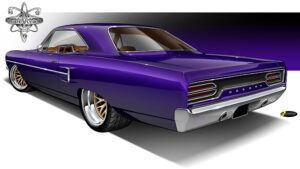
Rob kicks off on familiar ground with Heidts Suspension—one of the very first performance suspension companies he ever encountered back in the good-guy’s autocross days. The conversation starts with those early bolt-in Camaro systems and Randy Johnson’s famous “Repeel’d” car, then fast-forwards to today: a gorgeous purple 1970 Plymouth Road Runner built by Steve Strope, wearing Heidts’ all-new independent front and rear suspension systems for Mopar E- and B-bodies. The headline: these are true bolt-in IFS/IRS packages. No hacking the car, no permanent surgery, and if you ever wanted to go back to stock (even if nobody can quite imagine why), the option is there. The rear system is built to handle up to 800 horsepower, and the front is designed with enough strength and geometry to deal with anything from classic big-blocks to modern Hellcat-style power.
Heidts also breaks down why “bolt-in” matters beyond collector value: not everybody has a welder, and not every enthusiast is a fabricator. Their systems cradle around the factory structure and are designed for realistic garage installs—roughly 10–15 hours for a front system, 15–20 for the IRS, in “normal person” time. Adjustability is baked in: camber, caster, toe, roll centers, sway bars, shocks, and spring rates are all tunable, whether you’re a “track day every month” person or just want a car that finally drives as good as it looks. They’ve also evolved from their early inboard-brake IRS designs to outboard brake setups on newer systems for better handling, more room for larger brakes, and improved real-world performance, while still keeping some of the legacy systems for folks who love that show-car look.
The interview also reveals how far Heidts has grown beyond the “hot rod only” image. Yes, they still serve the street rod and classic truck crowd in a big way, but muscle cars are now the core of the business: Mustangs, Camaros, Novas, Tri-Fives, and C10s all have dedicated offerings, including full frame/chassis packages for trucks and classics. For the custom builders working off-menu—oddball Dodge trucks, unique swaps, or one-off builds—Heidts’ “Universal Super Ride” front and heavy-duty four-link rear packages act as a flexible foundation. These universal systems offer more adjustability, coilovers, power rack-and-pinion, and the strength needed for modern horsepower, giving builders a trustworthy starting point when no catalog chassis exists.
Learn more at
https://heidts.com/
https://www.purevisiondesign.com/
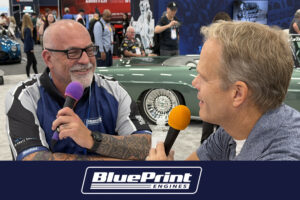
Blueprint Engines
LS-Compatible and Beyond: Blueprint Engines’ OEM-Style Power with Hot Rod Soul
Rob’s next stop is Blueprint Engines, where he sits down with Sales & Marketing Manager Jason Bruce. Blueprint has quickly become “the OEM of the aftermarket”—a company that doesn’t just reman a factory design, but creates its own line of “compatible” engines that look like OEM units on the outside yet are improved where it counts. Jason explains the language: GM makes the LS, Ford makes the Coyote; Blueprint makes LS-compatible (or Ford-compatible, etc.) engines. Dimensionally, their blocks match the factory stuff on the outside, but internally they’ve done all the clever hot-rodder tricks: priority main oiling, extended piston skirts, and component packages designed specifically as systems, not random parts bin builds.
Every Blueprint engine starts with a new block, not a reman or seasoned core. Many of their blocks are cast in Germany and then shipped to their 211,000-square-foot facility in Kearney, Nebraska, where everything is machined, assembled, and tested in-house by roughly 300 employees. They vertically integrate cranks, rods, pistons, rings, heads, manifolds—you’re buying a unified design with a known recipe, not a mystery combo. The product line covers small-block Chevy compatibles (350, 327, 383, 400), small-block Ford compatibles (302, 347, 427), Mopar 408 small-block compatibles, Gen 3 Hemi compatibles, and big-block Chevy compatibles from 454 all the way to 632 cubic inches. Despite the hype around LS swaps, Blueprint has actually set records in recent years for small-block Chevy sales—especially 383s, which Rob himself recommended to his brother-in-law over a junkyard LS for a blown-‘big block’ Chevelle.

Blueprint isn’t staying in the “street-only” lane, either. Jason outlines their growing Blueprint Motorsports line, which takes their LS and small-block Chevy compatible platforms and pushes them further into dedicated motorsports duty—circle track, drag racing, drifting, off-road—by being more aggressive with camshaft choices and internal durability. They’ve also partnered with ZF on turnkey LS-compatible + ZF 8-speed automatic packages: engines and transmissions bolted together, tuned, with harnesses and factory-level drivability, backed by a warranty. For low-volume manufacturers, Blueprint is working on a Ford Coyote-based SPMV (small production motor vehicle) package that’s currently in the final CARB emissions approval stages. Once blessed with an EO number, it will allow builders like Superformance, Factory Five, and others to sell truly new, emissions-legal cars with a fully compliant, non-donor drivetrain. All of this is backed by real human support—5–6 people on phones daily, strong distributor coverage (Summit, JEGS, Speedway), and the culture Jason fell in love with: a privately-owned company led by founder Norris Marshall, built on “Nebraska Nice” and the simple ethic of quality, value, and always making it right for the customer.
Learn more at
https://blueprintengines.com/
https://www.chipfoose.com/

Diamondback Classic Radials
Custom Sidewalls and Bias-Look Radials: Diamondback’s Family Tire Legacy
From engines to rubber, Rob’s first SEMA 2025 interview is with Tab Chapman, CEO of Diamondback Classic Radials. Diamondback doesn’t just sell tires—they customize them. Using technology borrowed from retreading—but applied to the sidewall instead of the tread—they take brand-new tires and modify the sidewalls into almost anything you can dream up: whitewalls, redlines, goldlines, bluelines, even red-white-and-blue combinations. Many of the base tires are manufactured overseas or sourced from reputable name brands, then shipped to Diamondback’s South Carolina facility, where they’re transformed and warehoused in a 25,000 sq. ft. storage space.
The roots of the company go all the way back to 1935, when Tab’s grandfather got into retreading—a necessity during wartime rationing when new tires were scarce. The family ran a large-scale retread plant, doing up to 600 tires a day, right up until cheap overseas new tires crushed the margins in the 1990s. That’s when Tab’s father and brother pivoted: they repurposed their retread equipment to work on sidewalls, chasing vintage-style whitewalls for old cars that needed safe, modern radials. Nearly forty years later, Diamondback has refined that into a full-blown business that marries period-correct appearance with radial ride and safety.

For the Muscle Car Place audience—heavily ‘60s and ‘70s oriented—Tab says the biggest sellers are redlines in just about every modern and classic diameter: 14″, 15″, 17″, 18″, 19″, and 20″, with coverage for most staggered fitments. Their Auburn Deluxe line is a bias-look radial aimed at pre-muscle car and early street rod builds—tires that visually mimic era-correct bias-ply treads and shoulders but ride like radials. Diamondback also owns some of their own molds, giving them exclusive “house brand” tires that nobody else can sell. Customers usually come in knowing either their original bias-ply size or their desired radial size, and the Diamondback team helps translate, fine-tune fitment, and build the exact combination of sidewall look, size, and stance.
Learn more at
https://dbtires.com/


This interview sponsored by our pals at National Parts Depot –
your premier source for muscle car restoration parts!